Wall Anchors That Stop Bowing Walls
We stabilize leaning basement walls and help protect your home from further structural damage.
Protect your home's walls and value with trusted wall anchor repair from Ground Support Specialists.
We stabilize leaning basement walls and help protect your home from further structural damage.
We start with a full basement and exterior inspection to measure wall movement, check soil pressure, and identify cracks, stair-step separation, or inward bowing. Then we explain if wall anchors are the right fix, map anchor locations, and give you a clear estimate and timeline, often within 24 to 48 hours.
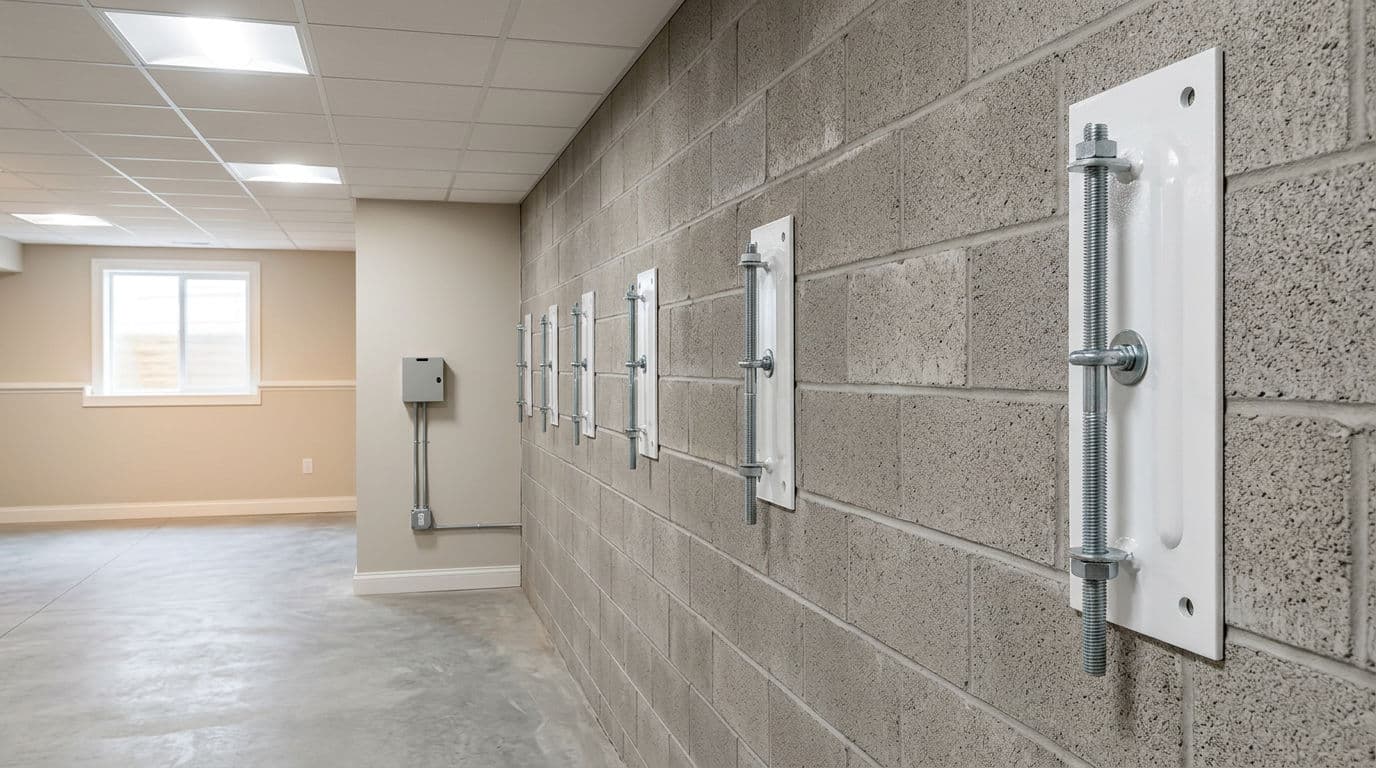
Once approved, we schedule the work, excavate anchor locations outside the foundation, and install steel anchor plates, threaded rods, and interior wall plates to stabilize the wall. Most wall anchor jobs are completed in one to two days, and we protect your property while keeping disruption to a minimum.
After installation, we tighten the system to begin bracing the wall and confirm every anchor is properly aligned and secured for long-term performance. Before we leave, we review the finished work with you, answer questions, and explain what to expect as the wall is gradually straightened over time.
At Ground Support Specialists, we install wall anchors to stop bowing, leaning, and cracked foundation walls from getting worse. This is one of the most reliable ways to stabilize basement walls that are being pushed inward by outside soil pressure. If your basement wall has horizontal cracks, stair-step cracks, inward movement, or visible bulging, wall anchors may be the right solution.
We have seen this problem many times. Heavy clay soil, poor drainage, freeze-thaw cycles, and saturated ground can all put too much pressure on foundation walls. Over time, that pressure can cause a wall to shift inward. The longer it is left alone, the more damage it can cause to the structure above it. Our job is to catch the problem, explain it clearly, and install the right repair system to protect your home.
A wall anchor system is designed to brace and stabilize a damaged foundation wall from the outside soil load. The system uses strong steel components that connect the failing wall to stable soil farther away from the house. Once installed, the anchor helps hold the wall in place and can often be tightened over time to help improve the wall’s position.
Here is the basic idea:
This gives the wall added support without the cost and disruption of fully replacing the foundation wall in many cases.
Not every cracked wall needs the same repair. That is why we always start with a careful inspection. Wall anchors are commonly recommended when we find:
If the wall has moved too far or is severely broken down, another foundation repair method may be more appropriate. We will tell you that honestly. Our goal is to recommend what is best for the house, not push a one-size-fits-all fix.
Wall anchor systems are often used on basement foundation walls made of concrete block, brick, or poured concrete. They are especially effective when there is enough open yard space outside the affected wall to place the earth anchors. In many homes, this makes wall anchors a practical option for long basement walls with visible inward pressure.
We may recommend wall anchors for:
We believe customers should know exactly what to expect. When we install wall anchors, we follow a step-by-step process focused on safety, accuracy, and long-term performance.
We work carefully to keep disruption as low as possible. Our team also explains what areas of the basement and yard will be affected before we begin.
Wall anchors are popular because they solve a serious problem without the expense of a full wall rebuild in many situations. Some of the biggest benefits include:
Most homeowners call us because they are worried about what they are seeing. Our goal is to remove that uncertainty. We explain the real condition of the wall, what caused it, and what repair options make sense for your budget and the structure.
A good wall repair starts with a full picture of the problem. Before recommending wall anchors, we look at several site conditions:
These details matter. They help us design a repair plan that fits the actual structure instead of guessing.
Installing wall anchors is often one part of a larger foundation stabilization plan. In some homes, we may also recommend drainage improvements, grading correction, gutter downspout extensions, or waterproofing steps to reduce the pressure that caused the problem in the first place. Stabilizing the wall is critical, but managing water and soil conditions around the home is just as important for long-term performance.
That is why we do more than install hardware. We help homeowners understand the full cause of the issue so they can make smart decisions about protecting their basement and foundation.
When you call us, you are working with a team that understands foundation movement and basement wall failure from real field experience. We know these problems can feel overwhelming. We keep the process simple, honest, and clear. We show up, inspect the problem carefully, and recommend the repair that makes sense for your home.
Homeowners choose Ground Support Specialists because we focus on:
If you have a basement wall that is bowing, cracked, or leaning inward, do not wait for it to get worse. Early action can prevent more damage and help avoid more expensive structural repairs later. Contact Ground Support Specialists to schedule a wall anchor inspection. We will evaluate the problem, explain your options, and help you choose the safest and most cost-effective path forward.
Common questions homeowners ask us about bowing basement walls, wall anchor repair, pricing, timing, and what to expect from Ground Support Specialists.