Stable Helical Piers for Lasting Support
We install deep foundation supports that help stop settling, lift structures, and protect your home long-term.
Call Ground Support Specialists today to stop settling damage and protect your foundation for the long term.
We install deep foundation supports that help stop settling, lift structures, and protect your home long-term.
We start with a detailed foundation inspection to confirm settlement, measure floor elevation changes, and identify load-bearing areas that need support. Then we explain the best helical pier layout, answer your questions, and provide a clear written quote with timeline expectations.
Once approved, we schedule the work, locate utilities, and map each pier location to match your home’s footing and soil conditions. Our crew mechanically advances each helical pier to target torque, which helps verify capacity and gives your foundation reliable, long-term support.
After installation, we stabilize the affected foundation sections and review the results with you so you know exactly what was completed. We backfill work areas, leave the site neat, and walk you through next steps so you can move forward with confidence and peace of mind.
At Ground Support Specialists, we install helical piers to stabilize and lift foundations that have settled. This is one of the most reliable repair methods we use for homes, additions, garages, porches, and light commercial buildings. If you have cracked walls, sticking doors, sloping floors, or gaps around windows, your foundation may be moving because the soil below it is no longer supporting the structure the way it should. Helical piers are designed to transfer that weight past weak soil and down to more stable load-bearing layers.
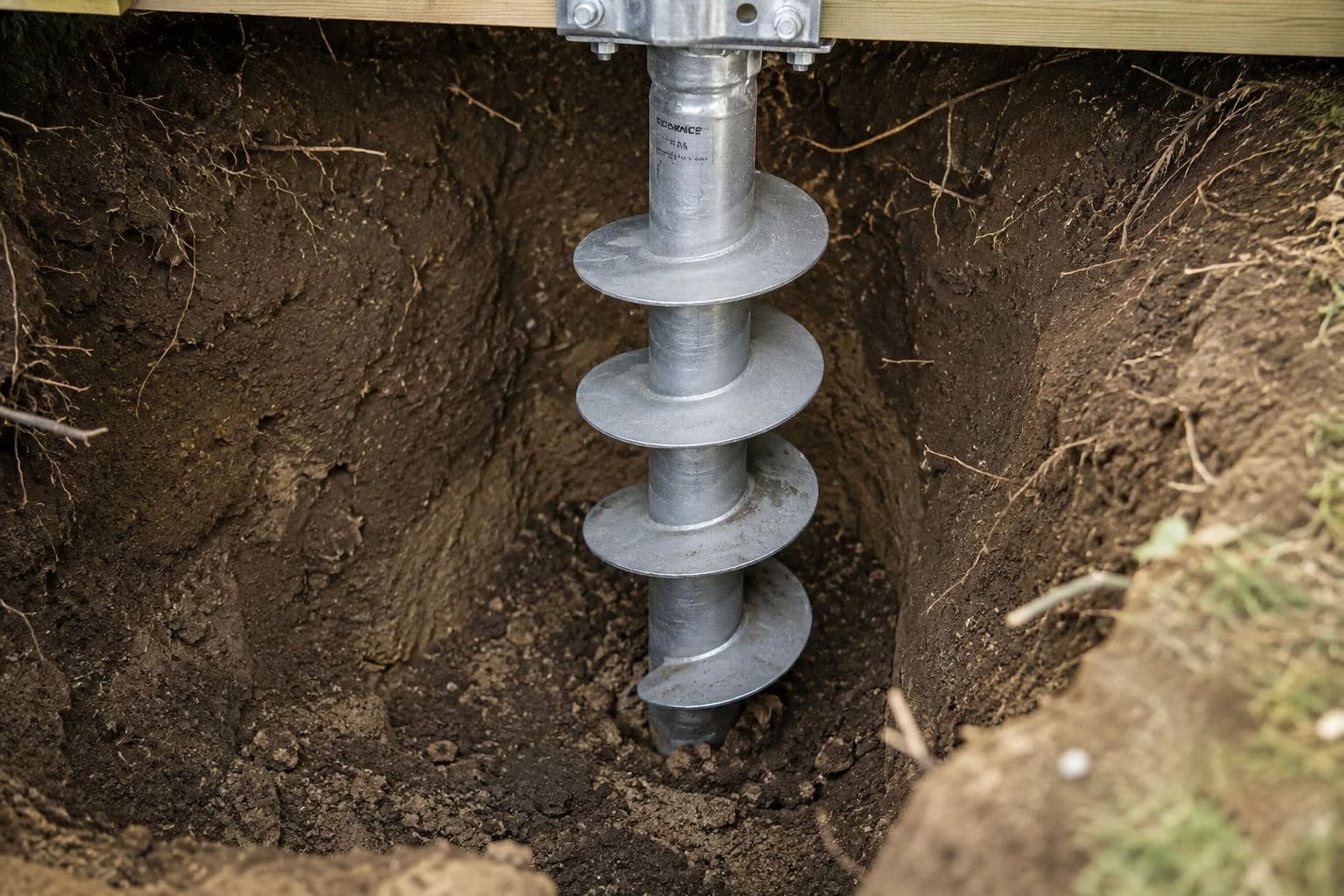
Helical piers are steel foundation supports with round shafts and helical plates welded to them. Those plates look similar to large screws, which is why many people call them screw piles or screw piers. We advance them into the ground using hydraulic equipment until they reach the depth and resistance needed to support the structure. Once the pier reaches proper capacity, we attach it to the foundation with engineered brackets. In many cases, we can then lift the settled area closer to its original position and help close cracks, improve floor slope, and reduce further movement.
This service is often used when a building shows signs of foundation settlement caused by expansive clay, loose fill, poor compaction, moisture swings, erosion, or long-term soil movement. It is also a strong option when we need a deep foundation solution with minimal excavation. Because helical piers are installed by torque rather than driven with heavy impact equipment, the process is cleaner and less disruptive than many property owners expect. That makes them a good fit for tight access areas and for projects where we want to limit disturbance to landscaping, sidewalks, and nearby structures.
The goal of a helical pier system is simple: move the structural load away from unstable surface soils and onto deeper, more competent soils. The steel pier shaft is mechanically advanced into the ground, and the helical plates pull the pier down as it rotates. During installation, we measure torque, which helps us verify the pier is reaching the load capacity required for the structure. Once all piers are installed, we secure them to the footing or grade beam with heavy-duty foundation brackets. If conditions allow, we use synchronized hydraulic lifting equipment to carefully raise the settled section of the structure.
This controlled installation method gives us strong data during the job. It also allows for predictable performance in many foundation repair applications. Helical piers are commonly used to support:
Not every crack means a home needs piers, but certain patterns can point to foundation settlement. We recommend an inspection if you have noticed:
When we inspect your property, we look at the full picture. That includes visible symptoms inside and outside the home, the direction of movement, drainage concerns, grading, gutter discharge, and likely soil conditions. Our job is to identify the real cause of settlement so we can recommend the right repair plan.
We believe customers should know exactly what to expect. Our helical pier service typically follows a clear step-by-step process:
Every property is different, so exact pier size, depth, and bracket design depend on the structure and soil conditions. In general, helical pier systems are valued because they offer:
Unlike shallow patch repairs, helical piers address the support issue below the foundation. That is why they are often used when long-term foundation stabilization matters most. They can be installed year-round in many conditions, and they do not rely on waiting for concrete cure times the way some other systems do.
We recommend helical piers when they are the best fit because they offer real advantages to the property owner:
Most of all, helical piers give homeowners peace of mind. If your home is settling, covering cracks without fixing the support problem will not solve anything. A proper piering system addresses the cause under the foundation.
We install helical piers in a range of foundation repair situations. Common project areas include perimeter foundations, corner settlements, interior load-bearing sections, porches, stoops, retaining elements tied to structures, and additions that are moving differently than the main home. We also use helical piers in some pre-construction and structural reinforcement applications where deep support is needed from the start.
In residential work, we often see helical piers used under homes with crawl spaces, basements, and slab foundations. The right repair depends on access, footing design, building loads, and how the soil is behaving around the home. That is why a proper on-site evaluation matters.
At Ground Support Specialists, we focus on practical repairs that protect your home and your budget. We do not believe in one-size-fits-all foundation repair. When we recommend helical piers, it is because the structure needs dependable deep support. We explain what we found, where the foundation is failing, how many piers may be needed, and what kind of improvement you can realistically expect.
Our team understands that foundation trouble is stressful. You may be worried about structural damage, property value, and how much worse things could get. We take that seriously. We show up ready to inspect the problem, answer your questions in plain language, and do the work the right way. Our goal is to deliver a stable foundation repair solution you can feel confident about.
If you are seeing signs of settlement, now is the time to act. Foundation movement usually does not fix itself, and waiting can lead to wider cracks, more difficult repairs, and higher costs. Contact Ground Support Specialists to schedule a helical pier inspection. We will take a close look at your foundation, explain whether helical piers are the right solution, and provide a clear plan to stabilize your home or building.
Common questions homeowners ask us about helical piers, foundation settlement, installation, and what to expect when working with Ground Support Specialists.