Fast Mud & Slab Jacking Solutions
We lift settled concrete, fix uneven slabs, and help restore safe, stable surfaces around your home.
Mud & Slab Jacking
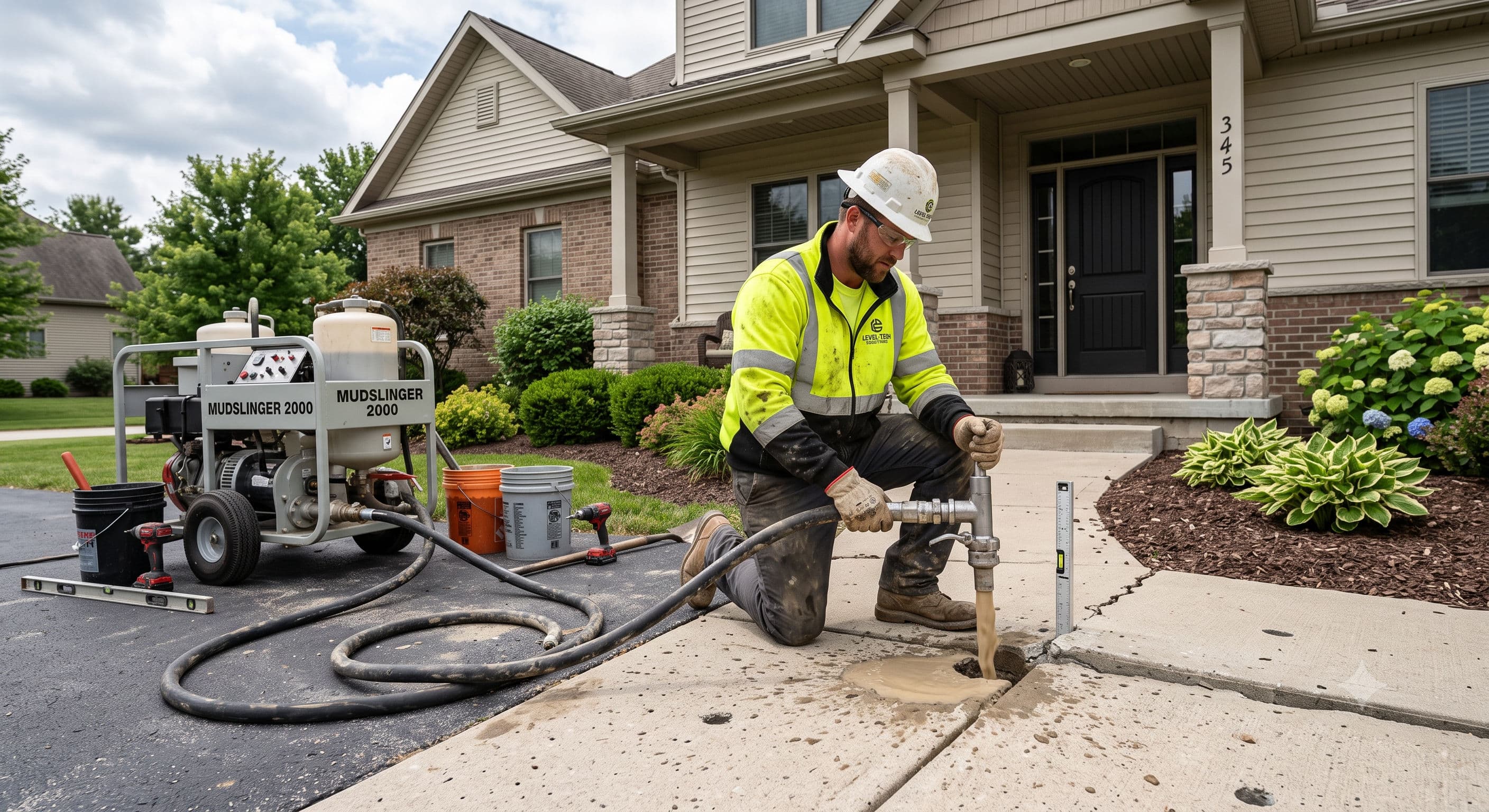
Not every sunken or settled slab needs to be torn out and replaced. Mud jacking and slab jacking raise sunken concrete back into place by filling the voids underneath it — a proven, cost-effective alternative to full replacement for sidewalks, driveways, patios, steps, and garage slabs.
Mud jacking is a process that dates back to the 1930s. Modern slab jacking has come a long way since then. Today, we lift concrete using certified CLSM (Controlled Low Strength Material) Portland Cement Grout — a material listed in the International Building Code (Chapter 18, Soils & Foundations) to support Portland Cement pavement. Traditional high-soil "mud" mixes are avoided because organic material in the soil can decompose over time and cause the slab to re-settle.
How it works
Small injection holes are drilled through the sunken slab, and cement grout is pumped underneath to fill voids and lift the concrete back to level. The grout provides complete coverage under the slab and sets in as little as 15 minutes to 4 hours. When drilled with a thin-wall diamond core bit, the original core can be saved and replaced afterward for a virtually invisible repair.
Why we use cement grout instead of polyurethane foam
Some slab jacking companies lift concrete with polyurethane foam. Based on engineering data and International Building Code standards, we believe certified CLSM Portland Cement Grout is the better material:
Code compliant. Certified CLSM is listed in IBC Chapter 18 (Soils & Foundations) to support concrete pavement. Polyurethane foam is not listed as an IBC-compliant material in that section.
Stronger support. CLSM cement grout meets or exceeds the compression strength of polyurethane foam, and with proper admixtures it provides complete coverage and better slab support.
No voids left behind. Foam expands in increments after injection, which can leave significant voids under the slab and lead to continued settling and future cracking. Cement grout offers absolute slump control and complete under-slab coverage.
Not flammable. Polyurethane foam is made from petroleum-based chemicals and is highly flammable — the Fire Marshalls Association has referred to it as "solid gasoline." CLSM cement grout (95% sand and pumping aids) is not flammable.
Environmentally friendly. Concrete lifted with cement grout is accepted at concrete recycling centers. Foam adheres to the bottom of the slab and is not accepted for recycling.
Lower cost. Polyurethane foam and its equipment cost significantly more. Cement grout slab jacking typically reflects a much lower product and service cost — often around 50% less.
One common claim from foam contractors is that grout is too heavy. In reality, the weight of the grout is insignificant for the vast majority of weight-bearing soils — cement grout weighs less per square foot than an average person's weight per square foot. With either material, a lifted slab is only as stable as the subbase beneath it, which is why proper injection and coverage matter so much.
Signs your concrete may need slab jacking
Sidewalk or driveway sections that have sunk, settled, or tilted
Trip hazards where slab edges no longer line up
Steps or stoops pulling away from the house
Water pooling toward the foundation or garage
Cracking caused by voids and uneven support underneath
If your slab is structurally sound but has settled, slab jacking can restore it for a fraction of the cost of replacement — and if the concrete is too far gone, we'll tell you honestly and can handle the replacement too. Call Anderson Yardworks, LLC at (701) 490-2363 to have us take a look.
Mud & Slab Jacking FAQs
Common questions homeowners ask us before lifting and leveling concrete around their home.
Lift Your Slab Before It Gets Worse
Act now to restore safety, stop settling, and protect your property with trusted mud jacking experts.